1. Why Choose a Low Bed Trailer in Zimbabwe?
2. What Are the Main Low Bed Trailer Specifications?
3. How Much Does a Low Bed Trailer Cost in Zimbabwe?
4. Which Low Bed Trailer Is Best for Heavy Equipment?
5. Where to Find a Low Bed Trailer for Sale in Zimbabwe?
A suitable low bed trailer helps Zimbabwean mining companies, construction contractors, equipment dealers, and heavy-haulage operators transport heavy machinery more safely and efficiently. The best choice depends on the actual cargo weight, machine dimensions, road conditions, axle configuration, loading requirements, and total operating budget—not simply the trailer's advertised payload.
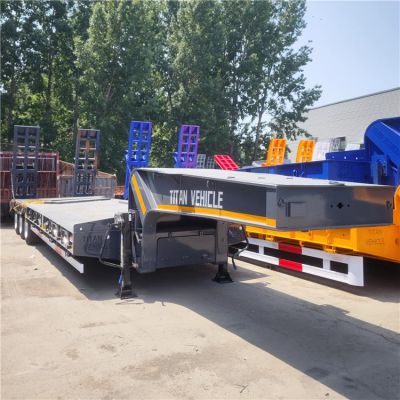
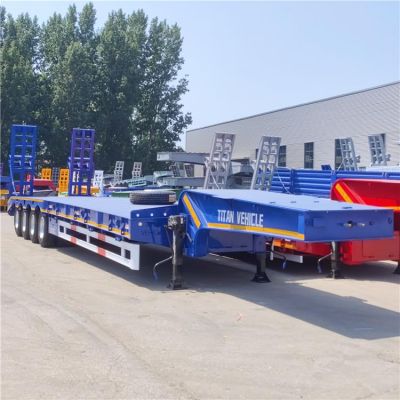
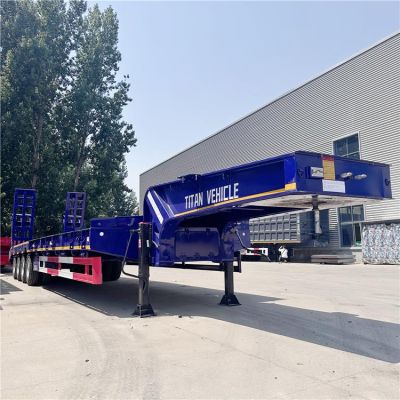
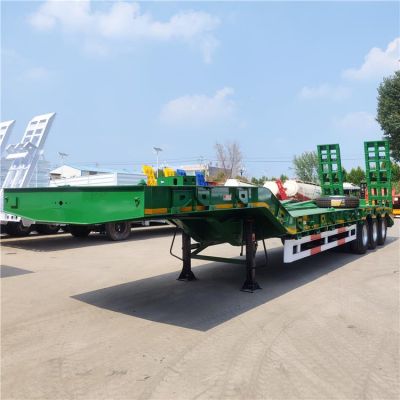
A low bed trailer, also known as a lowbed trailer or low loader, is a specialized semi-trailer designed with a low loading platform. Compared with a conventional flatbed trailer, its lower deck can help reduce the overall transport height of tall machinery and provide a practical loading platform for excavators, bulldozers, wheel loaders, graders, drilling equipment, and other heavy-duty machines.
For customers in Zimbabwe, purchasing a low bed trailer is an important investment in transportation capacity. Mining projects may require frequent movement of excavators and drilling machines, while construction contractors need to transport earthmoving equipment between road projects, commercial developments, and remote worksites. Agricultural businesses and industrial operators may also require lowbed trailers for moving tractors, generators, and other large machinery.
When comparing a low bed trailer for sale, buyers should evaluate the complete transport combination, including the trailer, tractor head, cargo, loading equipment, and planned route. A trailer rated for a particular payload is not automatically suitable for every machine of that weight. Axle loads, kingpin loading, overall dimensions, braking performance, and applicable road requirements must also be considered.
A low bed trailer is a practical solution for transporting heavy construction, mining, agricultural, and industrial machinery in Zimbabwe because its low platform can accommodate tall equipment while supporting purpose-designed heavy-duty transport configurations.
Supporting Zimbabwe's Mining and Construction Industries
Zimbabwe's mining and construction sectors use a wide range of heavy machinery that cannot always be transported economically or safely on a standard cargo trailer. Equipment may need to be relocated for a new project, delivered to a mine, moved between work areas, or returned to a maintenance facility.
A low bed trailer can be configured for transporting machinery such as:
Hydraulic excavators used for earthmoving and mining operations.
Bulldozers used for land clearing, grading, and site preparation.
Wheel loaders used for loading minerals, aggregates, and construction materials.
Motor graders used for road construction and maintenance.
Drilling equipment used in mining and other industrial applications.
Road rollers and compactors used in infrastructure projects.
Large agricultural tractors and specialized farm machinery.
Industrial generators and other heavy equipment, subject to their dimensions and loading requirements.
The appropriate model depends on the machine's actual operating weight and transport dimensions. Buyers should use the manufacturer's equipment data rather than estimate the weight from the machine's appearance or model name alone.
For example, an excavator may be transported with certain attachments removed to reduce its transport height and weight. A bulldozer may require particular attention to track width and loading arrangements. A generator may need additional support or securing provisions depending on its base structure.
A lowbed trailer supplier can use this information to recommend a suitable deck length, deck width, payload rating, axle configuration, and ramp arrangement.
A Lower Platform for Tall Machinery
One major advantage of a low bed trailer is its lower loading deck compared with many conventional flatbed designs.
A lower deck can reduce the height of the complete loaded vehicle combination, which is particularly important when transporting excavators, tall machinery, or equipment with fixed structures. However, the final transport height also includes the machine's own height, the loading position, the trailer structure, and any accessories.
Before purchasing a low bed trailer for Zimbabwe, buyers should calculate the loaded height of the actual machine. This is more reliable than comparing the unloaded deck height of different trailers.
The loading platform should also provide enough usable length for the equipment's tracks, wheels, or support points. If the machine is too long or wide, the buyer may need a different platform design, removable gooseneck, widened deck, or another specialized transport solution.
A lower platform does not eliminate the need to check overhead obstacles, bridge clearances, route restrictions, or applicable permits.
Better Matching for Heavy Equipment Transport
A correctly configured low bed trailer can support heavy machinery transport through an appropriate combination of chassis structure, axles, suspension, tires, brakes, and load-securing equipment.
The key is matching each component to the intended operating conditions. A trailer used mainly for moderate construction equipment may have different requirements from one regularly transporting large mining machines over long distances.
A suitable specification may include:
A reinforced main beam structure designed for the intended load.
Axles and suspension selected for the required axle loads.
Tires with suitable load ratings and dimensions.
A braking system compatible with the tractor head.
Loading ramps suited to the machine's ground clearance and weight.
A practical deck design for the equipment's contact points.
Durable components that can be inspected and maintained locally.
Applications Across Different Zimbabwean Industries
Low bed trailers are not limited to mining companies. They can also support construction contractors, equipment rental businesses, agricultural operators, and industrial service providers.
A business transporting several types of machinery may benefit from a versatile low bed trailer, provided the different cargo weights and dimensions remain within the trailer's approved capabilities.
An operator carrying one specific type of machine repeatedly may prefer a configuration optimized for that machine. This can make loading and securing more consistent and reduce unnecessary features.
Choosing a Trailer for Local Road and Site Conditions
The right low bed trailer for Zimbabwe should be selected according to the actual route, cargo, and maintenance arrangements.
Major roads and remote worksite access roads may present very different operating conditions. Long-distance highway transport places emphasis on roadworthiness, braking, tire condition, and stable handling. Rougher site access can increase the importance of chassis strength, suspension suitability, ground clearance, and regular inspections.
Buyers should also consider the availability of replacement tires, brake components, suspension parts, and qualified maintenance support. A slightly cheaper trailer can become more expensive to operate if its parts are difficult to source or its configuration is unsuitable for the working environment.
Before confirming an order, provide the supplier with the main route, typical road surface, expected travel frequency, and cargo details. These details allow the manufacturer to recommend a more practical specification.
 Why Choose a Low Bed Trailer in Zimbabwe?
The main low bed trailer specifications are payload capacity, axle configuration, platform dimensions, suspension, braking system, loading ramps, and structural design. Zimbabwean buyers should compare these specifications against the actual machinery being transported and the applicable road and axle-load requirements.
A trailer's advertised tonnage is only one part of the purchasing decision. Two trailers with the same nominal payload may have different platform dimensions, axle ratings, equipment options, and operating suitability.
Payload Capacity and Equipment Weight
Payload capacity determines the maximum cargo weight a trailer is designed and rated to carry under its specified operating conditions. Buyers should distinguish payload from tare weight and gross combination weight.
Payload: The weight of the cargo the trailer can carry within its rated limits.
Tare weight: The weight of the empty trailer.
Gross trailer mass: The total weight of the trailer and its load, as defined by the applicable rating.
Combination weight: The total operating weight of the tractor head, trailer, cargo, and any other included components.
These figures are related but are not interchangeable.
For example, a machine weighing 55 tonnes should not automatically be assigned to a trailer advertised as a 60-ton model without checking the actual rated payload, the machine's transport configuration, and the load distribution. The weight of attachments, accessories, and equipment carried with the machine must also be included.
The tractor head must be suitable for the complete combination. Its fifth wheel, axle ratings, engine and transmission configuration, braking compatibility, and permitted operating weights all matter.
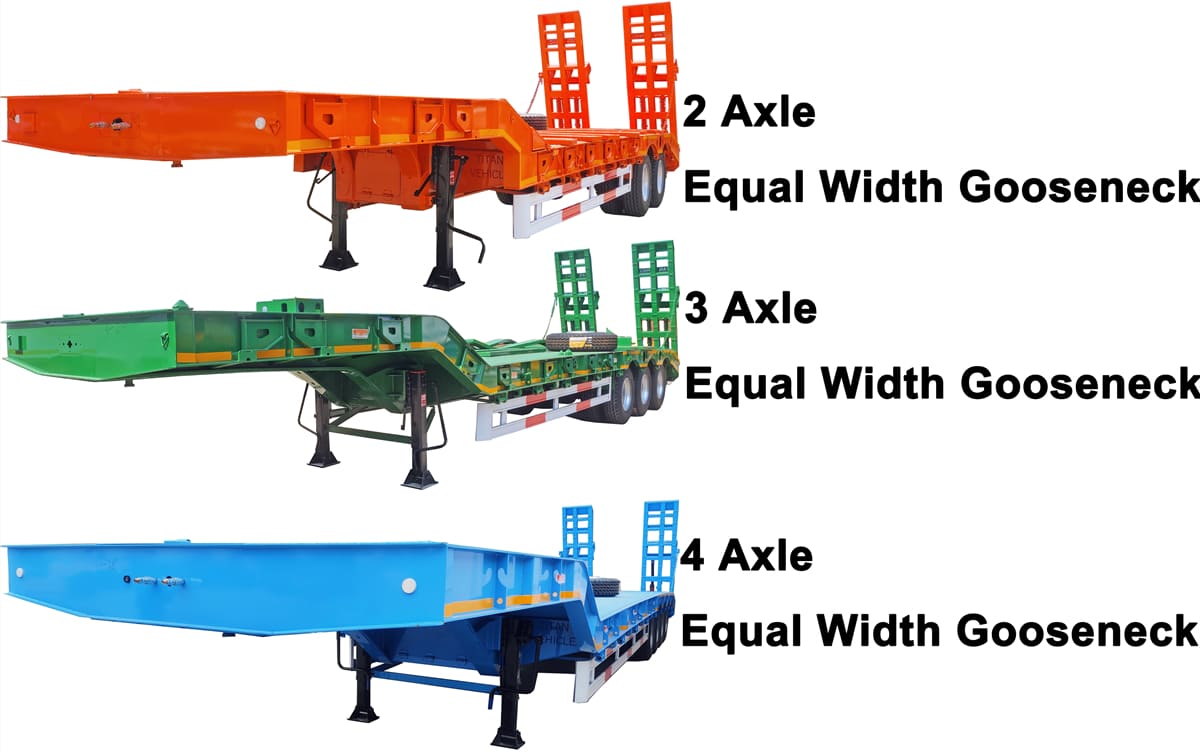
2 Axle Configuration: Two, Three, Four, or More Axles
Axle configuration affects load distribution, tire requirements, maneuverability, maintenance, and the suitability of a low bed trailer for different cargo weights.
Two-axle and three-axle models may be appropriate for some lower-weight machinery, while four-axle and multi-axle designs may be considered for heavier equipment. The correct configuration must be determined from engineering specifications and applicable road requirements rather than from a simple tonnage rule.
Adding axles does not automatically make a trailer legal for a heavier load. The axle ratings, spacing, suspension, frame, kingpin loading, tractor configuration, and applicable limits must all be checked.
Platform Length, Width, and Height
Platform dimensions determine whether the equipment can be positioned correctly and transported within the applicable overall dimensions.
Platform length should accommodate the machine's transport length and provide appropriate space for positioning and securing. Platform width should account for the machine's track width or tire arrangement, support points, and loading requirements.
Deck height is particularly important because it contributes directly to the total loaded height.
The dimensions in the final quotation should refer to clearly defined measurement points. Customers should not assume that the usable deck dimensions are identical to the trailer's overall dimensions.
When transporting tall machinery in Zimbabwe, route planning should account for bridges, overhead structures, road geometry, and any restrictions that apply to the loaded vehicle.
Chassis Structure and Steel Material
The chassis transfers loads through the deck, suspension, axles, and kingpin area. Its design is therefore one of the most important factors affecting the trailer's structural performance.
A low bed trailer intended for repeated heavy-duty work should have a structure engineered for the specified payload and load distribution. Main beam dimensions, cross-member spacing, weld quality, reinforcement points, and the location of the cargo's support points all affect performance.
High-strength steel may be specified where suitable, but material grade alone does not determine the trailer's overall strength. Structural geometry, fabrication quality, welding, fatigue resistance, and manufacturing control also matter.
Buyers should ask the manufacturer to confirm:
The main structural material and its grade.
The rated payload and relevant engineering limits.
The frame design for the intended cargo.
The fabrication and inspection process.
The protective coating or corrosion-control treatment.
Any maintenance and inspection recommendations.
For equipment with concentrated loads, the support points must be considered carefully. A machine resting on narrow tracks or specific structural supports may distribute weight differently from a machine with a broad contact area.
The trailer should be designed for the actual loading arrangement rather than relying only on a general cargo-weight figure.
Suspension, Axles, Tires, and Brakes
Suspension, axles, tires, and brakes must work together as a complete running-gear system.
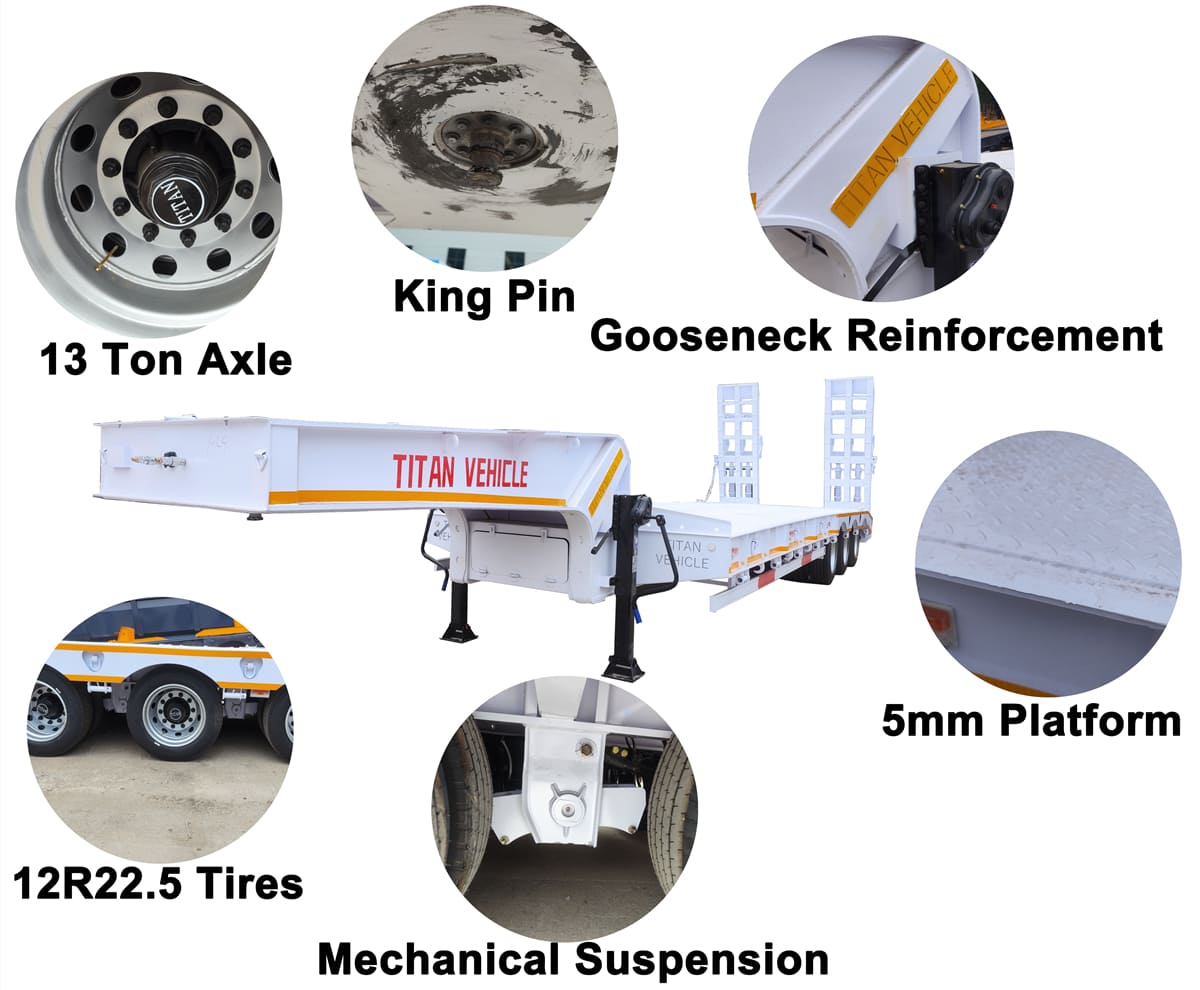
Axle ratings should match the expected load distribution. Tires need sufficient load capacity and suitable dimensions. The suspension must be compatible with the axle arrangement and intended working conditions, while the braking system must be compatible with the tractor head and meet applicable requirements.
For operators working in remote parts of Zimbabwe, ease of inspection and access to replacement parts can influence long-term costs. Customers should confirm the availability of technical documentation and replacement components before selecting specialized systems.
Important items to compare include:
Axle manufacturer, model, and rating.
Tire size, quantity, and load rating.
Suspension type and rated application.
Brake configuration and compatibility.
Electrical connections and lighting.
Spare wheel and maintenance provisions, where applicable.
Brand names should be treated as specific specification items. If a quotation lists a particular axle, brake valve, landing gear, or suspension brand, the buyer should confirm the model and the agreed supply scope.
Loading Ramps and Gooseneck Design
Loading equipment affects how easily a machine can be moved onto and off the trailer.
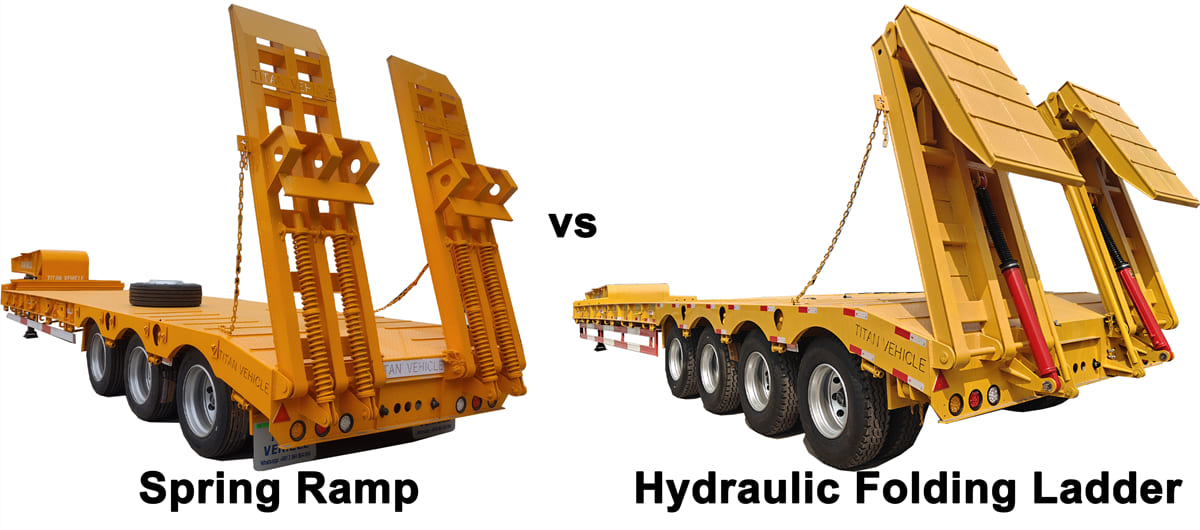
A low bed trailer may be fitted with mechanical ramps, hydraulic ramps, or another loading arrangement depending on the design. Ramp capacity, width, length, surface grip, and loading angle should match the machine being transported.
A machine with low ground clearance may need a different ramp arrangement from a tall excavator with suitable approach geometry. The weight distribution during loading is also important because the trailer experiences different forces while the machine moves onto the deck.
Some lowbed designs use a fixed gooseneck, while others use a removable gooseneck or specialized front-loading arrangement. A removable gooseneck can facilitate loading certain machines from the front, but it adds design complexity and requires compatibility with the cargo and operating method.
Customization for Zimbabwean Buyers
A low bed trailer can be specified for different transport tasks, but customization should address a real operational requirement.
Useful options may include different platform dimensions, axle arrangements, ramp systems, suspension configurations, landing gear, spare-wheel carriers, securing points, and electrical specifications.
Before requesting a quotation, prepare a short equipment profile containing the machine model, operating weight, overall length, width, height, and any removable attachments. Add the preferred loading method and intended transport route where known.
This information gives the manufacturer a better basis for recommending a suitable low bed trailer for sale in Zimbabwe and reduces the risk of ordering a configuration that does not match the intended cargo.
 What Are the Main Low Bed Trailer Specifications?
The low bed trailer price in Zimbabwe depends on the trailer's rated payload, axle configuration, platform dimensions, steel structure, running gear, loading system, customization requirements, and delivery arrangements. The most suitable quotation is one that matches the customer's equipment and operating conditions while clearly identifying what is included in the price.
There is no single price that applies to every low bed trailer. A basic configuration for a specific machine may cost less than a specialized heavy-haulage trailer with additional axles, hydraulic systems, or a removable gooseneck. Two trailers advertised with the same payload may also have different specifications and manufacturing standards.
For this reason, buyers should compare complete technical quotations rather than selecting a supplier based on the lowest advertised figure alone.
Main Factors Affecting Low Bed Trailer Price
Several factors determine the final low bed trailer price. Understanding them helps Zimbabwean buyers decide which features are essential and which options can be adjusted to meet their budgets.
How Axle Configuration Affects Price
Axle configuration is one of the main elements to consider when comparing low bed trailer prices.
A two-axle trailer may be a cost-effective option for suitable lighter loads. A three-axle design can offer a practical balance for many general construction applications, while four-axle and multi-axle configurations may be appropriate for heavier or specialized transport requirements.
However, axle number should never be selected on price alone. The design must support the actual load distribution and comply with the relevant operating requirements.
A cheaper trailer with an unsuitable axle arrangement may create additional costs through operating restrictions, premature component wear, or the need for modifications. Conversely, purchasing a more complex trailer than the business needs may increase the initial investment and maintenance burden without delivering meaningful benefits.
How Materials and Components Influence Cost
The chassis, axles, suspension, tires, braking system, landing gear, and loading ramps all contribute to the total price.
The structural design also deserves attention. A low bed trailer carrying concentrated machine loads requires an appropriate frame and support arrangement. Simply increasing the steel thickness without considering the complete structure is not a substitute for proper engineering.
For long-term operating value, customers should evaluate the purchase price alongside expected maintenance, replacement-part availability, and the cost of keeping the trailer in service.
 How Much Does a Low Bed Trailer Cost in Zimbabwe?
The best low bed trailer for heavy equipment in Zimbabwe is the model that matches the machine's transport weight, dimensions, loading requirements, route conditions, and legal operating limits. A standard lowbed may be sufficient for some excavators and construction machinery, while oversized or exceptionally heavy cargo may require a specialized design.
Low Bed Trailer Selection by Equipment Type
Different types of machinery place different demands on the trailer. A machine's weight is important, but its geometry, ground clearance, track width, and loading method are equally relevant.
Selecting a Low Bed Trailer for Excavators
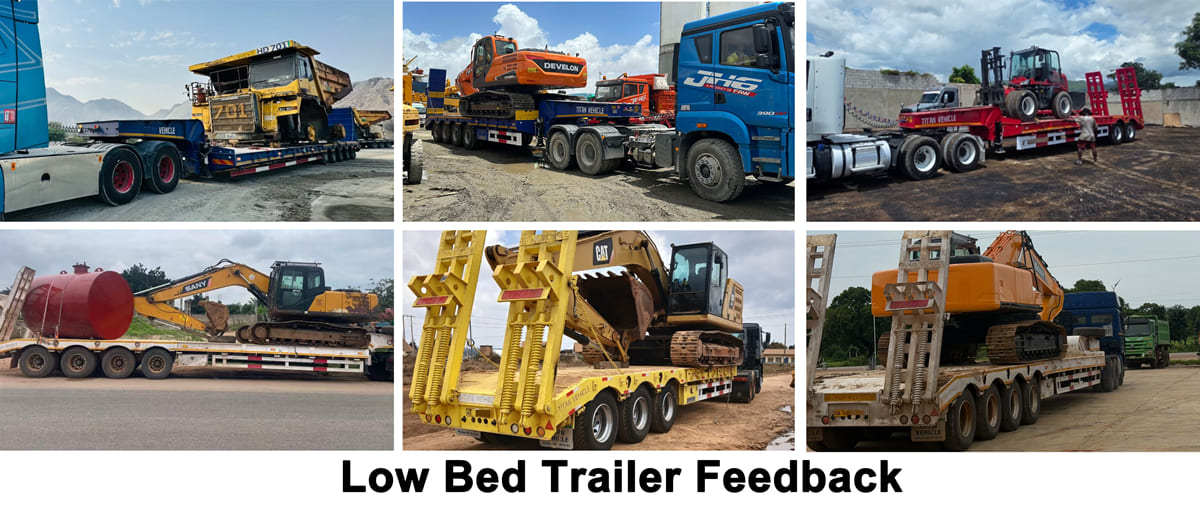
Excavators are common candidates for lowbed transport because they may need to move between construction projects, mines, and maintenance locations.
The buyer should confirm whether the machine will be transported with its boom, bucket, counterweight, or other attachments installed. These components affect the total weight, dimensions, and loading arrangement.
Track width and ground clearance should be measured carefully. The trailer deck must accommodate the tracks and provide suitable space for securing the machine. Ramp length and angle should be checked against the excavator's approach and departure geometry.
For larger excavators, axle configuration and load distribution require particular attention. The trailer, tractor head, and route must be assessed as one transport system.
A suitable low bed trailer can make repeated excavator movements more practical, but only if its deck, payload, and loading arrangement match the specific machine.
Selecting a Low Bed Trailer for Bulldozers and Graders
Bulldozers and motor graders often require careful attention to overall length, width, and the position of their heavy components.
For bulldozers, the blade and other attachments may affect the transport envelope. The supplier should know whether these parts will remain installed or be removed for transport. Track dimensions and the position of the machine's center of gravity should also be considered.
Motor graders can be long relative to their weight. This means that a trailer with sufficient payload may still have an unsuitable platform length or overall transport configuration.
When Is a Multi-Axle Low Bed Trailer Necessary?
A multi-axle low bed trailer may be appropriate when the cargo's weight, axle-load distribution, or specialized transport requirements exceed the practical capabilities of a conventional configuration.
Additional axles can help distribute loads when the trailer is engineered for that purpose. Specialized models may also use steering axles or hydraulic suspension systems to meet particular operational needs.
However, more axles do not automatically solve every transport challenge. The complete design must account for axle ratings, spacing, steering behavior, tire capacity, chassis strength, and the load carried by the tractor head.
For exceptionally heavy machinery, a specialized heavy-haulage trailer may be more suitable than a conventional lowbed.
Mechanical or Hydraulic Loading Systems?
The choice between mechanical ramps and hydraulic loading systems depends on how frequently equipment is loaded, the type of machinery involved, and the operating budget.
Mechanical ramps can provide a relatively straightforward solution when the equipment's loading geometry is compatible with the trailer. Hydraulic systems may offer operational convenience for suitable applications, but they add components that require maintenance and inspection.
A removable gooseneck may be useful for machines that benefit from front loading. It should be selected only when the cargo and operating procedure justify the additional design complexity.
Before deciding, buyers should consider the following questions:
Can the machine move safely up the proposed loading angle?
Does the ramp have sufficient rated capacity?
Is the deck height suitable for the machine's ground clearance?
Can the loading system be operated safely at the intended worksite?
Are replacement parts and maintenance support available?
Does the selected system fit within the overall budget?
The right loading system is one that the operator can use safely and consistently under real working conditions.
 Which Low Bed Trailer Is Best for Heavy Equipment?
Customers looking for a low bed trailer for sale in Zimbabwe should compare manufacturers and suppliers based on technical suitability, specification transparency, manufacturing quality, warranty terms, spare-parts support, and delivery arrangements. A reliable purchasing process starts with clear cargo information and ends with a confirmed specification and written quotation.
Buyers can explore local suppliers, regional dealers, and international manufacturers. Each route has different considerations, particularly when comparing available stock with a customized export order.
Local Suppliers and International Manufacturers
Local suppliers may offer advantages such as the ability to inspect available stock, communicate directly with a local seller, and discuss local service arrangements. However, buyers should still confirm the trailer's actual rated capacity, dimensions, condition, and included components.
International manufacturers may provide a wider range of configurations or customization options. This can be useful when the customer requires a particular platform length, axle arrangement, loading system, or specialized heavy-haulage design.
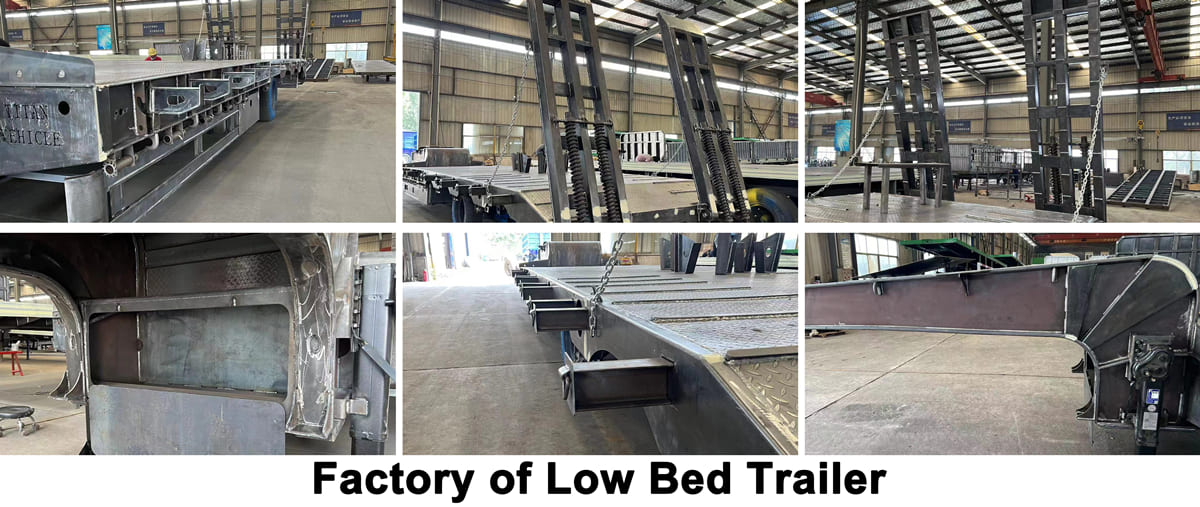
When buying directly from a manufacturer, customers should request technical drawings or a detailed specification sheet, clear photographs of the actual configuration where available, warranty terms, and a written delivery plan.
A supplier should be able to explain why a proposed configuration is suitable for the customer's equipment. If important specifications remain unclear, the buyer should resolve them before making a deposit.
New Versus Used Low Bed Trailers
A new low bed trailer may be preferable for businesses that require a specific configuration, documented manufacturing specifications, and a defined warranty. A used trailer may have a lower initial purchase price, but its condition and maintenance history require careful assessment.
For a used trailer, inspect the main beams, welds, suspension, axles, tires, brakes, ramps, kingpin area, and landing gear. Look for signs of structural damage, corrosion, unauthorized repairs, or uneven wear.
What to Check Before Placing an Order
Before purchasing a low bed trailer for Zimbabwe, buyers should verify the agreed specification and commercial terms in writing.
The order documents should identify the trailer model, rated payload, platform dimensions, axle configuration, suspension, tire specifications, braking system, ramp arrangement, and any optional equipment.
The contract should also clarify payment terms, production timing, inspection arrangements, warranty coverage, shipping responsibilities, and the documents supplied with the trailer.
A useful pre-order checklist includes:
Confirming the cargo weight and transport dimensions.
Checking the trailer's rated payload and axle configuration.
Reviewing the tractor-head compatibility requirements.
Confirming all agreed component brands and specifications.
Checking loading ramps and securing provisions.
Reviewing warranty and after-sales support.
Clarifying the price basis and delivery terms.
Confirming the expected production and shipping schedule.
Reviewing applicable import and road-compliance requirements.
If the buyer requires special features, these should appear in the technical specification rather than only in informal messages.
Request a Low Bed Trailer Quotation for Zimbabwe
If you are planning to purchase a low bed trailer for mining, construction, agricultural, or industrial equipment transport, begin by sharing the machine's weight and dimensions.
A manufacturer can use these details to evaluate the payload, platform size, axle arrangement, and loading system required. The proposed design can then be reviewed against the tractor head, transport route, and relevant operating requirements.
To request a quotation, provide:
Equipment model and quantity.
Equipment weight and dimensions.
Preferred trailer capacity, if known.
Preferred axle configuration, if known.
Loading ramp or gooseneck requirements.
Tractor-head details, if already available.
Delivery destination in Zimbabwe.
Required delivery schedule.
If you are unsure which model to choose, request a recommendation based on your equipment and working conditions.
The goal is to identify a low bed trailer that meets the actual transport requirements, provides a clear specification, and offers an appropriate balance between purchase cost and long-term operating value.
 Where to Find a Low Bed Trailer for Sale in Zimbabwe?