1. What Is a Goldhofer Trailer and How Is It Used in Nigeria?
2. Why Choose a Self Propelled Modular Transporter (SPMT) Trailer for Heavy Haulage in Nigeria?
3. Goldhofer vs. SPMT: What Are the Main Differences?
4. How Much Does a Goldhofer Trailer or SPMT Trailer Cost in Nigeria?
5. Where to Buy Goldhofer Trailers and Scheuerle Transporters in Nigeria?
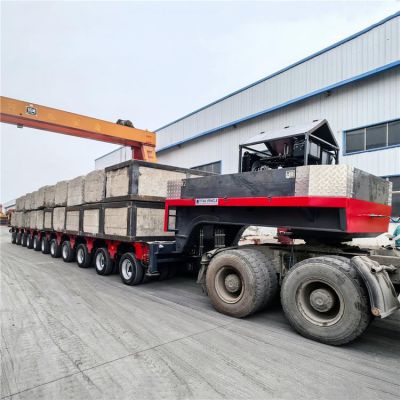
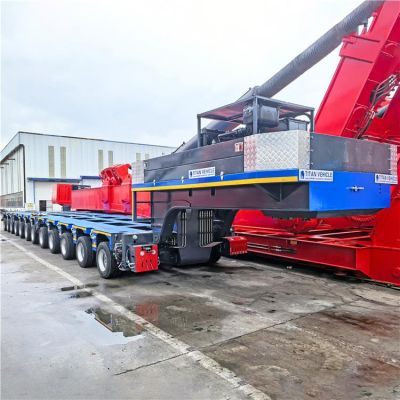
A Goldhofer trailer for sale in Nigeria is generally considered for heavy haulage projects where a conventional semi-trailer or lowbed trailer cannot provide enough payload capacity, axle distribution or maneuverability. Depending on the project, buyers may require a conventional heavy-duty modular trailer, a self propelled modular transporter SPMT, or a combination of modular transport units.
The right equipment depends on the cargo rather than simply the trailer name. Cargo weight, dimensions, loading points, center of gravity, road conditions and the required transport route all affect the final configuration.
For heavy transport projects in Nigeria, a modular transporter can be configured with multiple axle lines to distribute the cargo load. A self-propelled system adds its own drive and steering functions, making it suitable for controlled movement of heavy equipment at low speed.
The terms Goldhofer trailer, SPMT trailer, Scheuerle transporter and Scheuerle SPMT should also be understood correctly. Goldhofer and SCHEUERLE are established heavy-transport brands, while SPMT describes a type of self-propelled modular transport equipment.
A Goldhofer trailer is heavy-duty transport equipment designed for moving heavy and oversized cargo. Goldhofer's product range includes towed heavy-duty modules as well as self-propelled modular transport systems.
This means that the term Goldhofer trailer does not necessarily refer to one specific trailer model.
For a Nigerian buyer, the required equipment may be a towed modular trailer when a suitable tractor unit is available, or a self-propelled modular transporter when the project requires independent propulsion and precise movement.
The equipment can be used for transporting large industrial components, machinery and project cargo where conventional trailers are not sufficient.
Typical applications can include:
•Transformer transportation
•Power-generation equipment
•Industrial machinery
•Oil and gas equipment
•Large steel structures
•Construction equipment
•Heavy engineering components
•Oversized project cargo
The exact application depends on the cargo and transport route.
The main advantage of a heavy-duty modular system is its configuration flexibility.
Instead of using one fixed trailer body, modular units can be combined according to the required transport capacity.
For example, a project may require additional axle lines because the cargo is heavier than the capacity of a standard trailer. A wider configuration may also be required when the cargo has a large footprint.
This is where the modular design becomes important.
A modular transporter can be arranged according to the transportation requirement instead of being limited to one fixed trailer configuration.
For customers in Nigeria, this is particularly relevant when the cargo is oversized or when the project requires special transportation planning.
Goldhofer Trailer or SPMT?
The two should not simply be treated as identical products.
A Goldhofer product may be a towed heavy-duty module or a self-propelled system, depending on the model.
An SPMT trailer, by definition, refers to a self-propelled modular transport system. It normally integrates drive, steering and hydraulic suspension systems into the transport equipment.
Therefore, before requesting a quotation, the customer should first determine whether the project needs a towed modular transporter or a self propelled modular transporter SPMT.
Understanding the Transport Requirement Before Choosing the Trailer
For a heavy-haul project in Nigeria, the trailer should be selected after the cargo and transport conditions are understood. A heavy machine may have a relatively high total weight but a compact footprint, while another cargo may be lighter but very long or wide. These two loads can require different modular configurations even when the total payload is similar.
The cargo support points are also important. If the load is supported only at specific positions, the transporter arrangement needs to provide suitable support under those points. The center of gravity should also be considered when planning the transport configuration because a large or high load can affect stability during movement.
Another point is the difference between road transportation and site transportation. A modular trailer may be used on public roads with a suitable tractor, while an SPMT can be more useful inside a project site where precise low-speed movement is required. In some projects, both types of equipment may be used at different stages instead of relying on one transporter for the complete operation.
What Should Nigerian Buyers Check Before Asking for a Price?
Before contacting a supplier, buyers can prepare a simple cargo information sheet. It does not need to be complicated. The basic information should include the cargo weight, overall dimensions, support points, loading method, destination and expected transport route.
If the cargo is a transformer, generator or other large industrial component, photos and drawings can also help the supplier understand the shape and support requirements. When the cargo has an unusual center of gravity or special lifting points, these details should be communicated before the transporter is configured.
The buyer should also clarify whether the equipment will be operated mainly on public roads, inside an industrial plant, at a port, or on a construction project. This information can influence the choice between a towed modular trailer and an SPMT system.
Why Modular Equipment Is Different From a Standard Lowbed
A standard lowbed trailer normally has a relatively fixed structure and is selected according to its rated capacity and dimensions. A modular heavy-haul system provides more flexibility because axle lines and modules can be arranged for different project requirements.
This flexibility can be useful for Nigerian project cargo because the cargo size and weight can vary significantly between projects. A company transporting transformers may have different requirements from a company moving mining equipment, steel structures or oil and gas equipment.
For this reason, a Goldhofer-type modular trailer should be evaluated as part of the complete transport plan rather than only as a trailer product. The transporter, cargo, route and loading method need to work together.
 What Is a Goldhofer Trailer and How Is It Used in Nigeria?
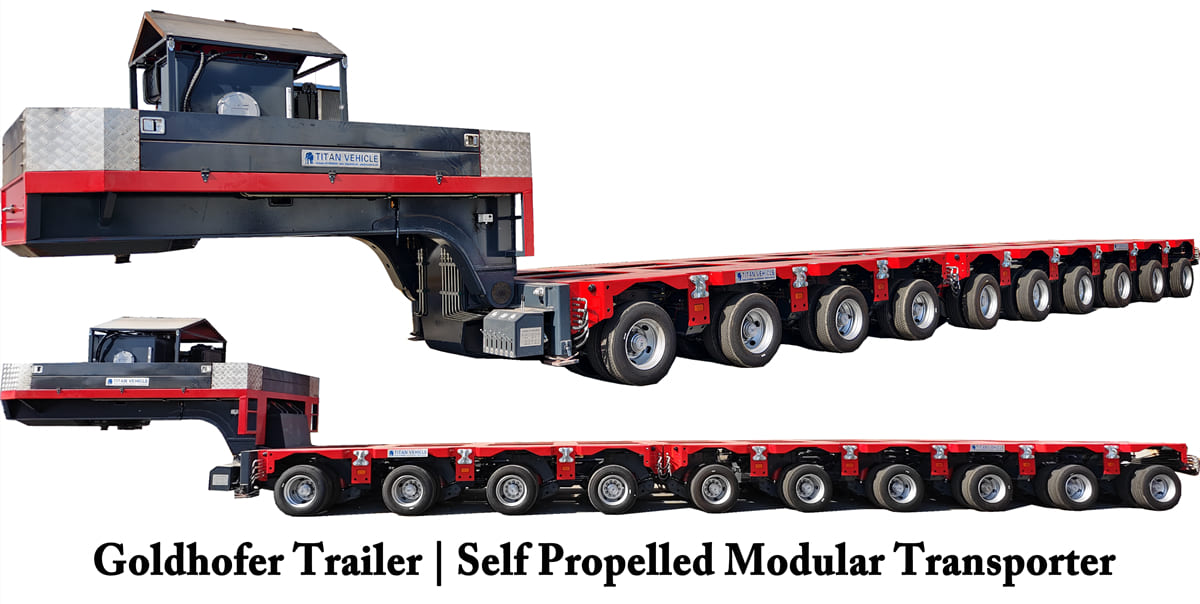
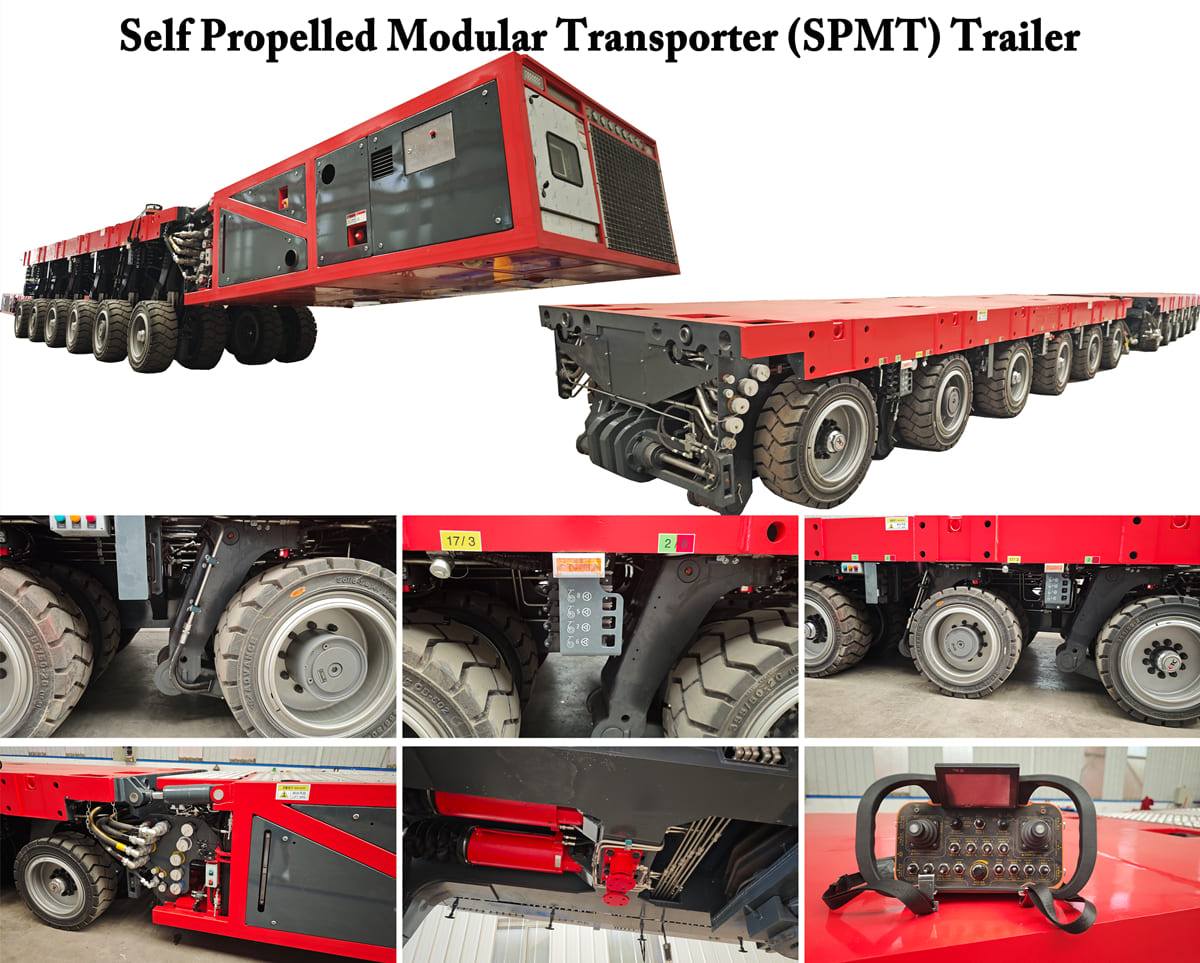
A self propelled modular transporter SPMT is designed for moving heavy and oversized loads without depending on a conventional tractor to provide the main driving force.
The SPMT system integrates powered axle lines, hydraulic suspension and steering functions into a modular transport platform.
This gives the operator greater control when moving heavy cargo.
For a Nigerian heavy-haulage project, an SPMT can be considered when the cargo is:
•Too heavy for a conventional trailer
•Too wide for a standard lowbed
•Difficult to maneuver using a tractor-trailer combination
•Required to move inside an industrial site
•Required to be positioned accurately at the final destination
Self-Propelled Operation
The key difference between an SPMT and a conventional trailer is the propulsion system.
A conventional lowbed trailer requires a tractor truck to pull it.
An SPMT uses its own power system to move the transporter.
This makes the equipment suitable for projects where the cargo needs to be moved at controlled low speed and positioned within a limited working area.
Modular Configuration
The second important feature is the modular design.
A SPMT trailer is not necessarily restricted to one fixed trailer length or axle arrangement.
Different modules can be combined according to the transportation requirement.
The configuration can therefore be determined according to:
Cargo weight
Cargo dimensions
Required axle load
Loading points
Road conditions
Site conditions
This is why SPMT equipment is commonly associated with project cargo rather than ordinary freight transportation.
Hydraulic Suspension
Hydraulic suspension allows the transporter to manage changes in the load and ground conditions.
For a heavy cargo project, maintaining stable load distribution is important.
The actual suspension system and technical specifications depend on the selected SPMT model.
Steering and Maneuverability
Another important feature of an SPMT is its steering capability.
Heavy cargo often cannot be moved efficiently using the same turning method as an ordinary truck and trailer.
An SPMT can use its controlled steering system to maneuver the transporter according to the project requirements.
This is particularly useful when transporting large equipment through industrial facilities, construction sites or restricted working areas.
SPMT Trailer Applications in Nigeria
The application of a self propelled modular transporter SPMT depends on the project.
For example, a large transformer may need to be transported from a port to a power project and then positioned at the installation site.
A conventional trailer may be sufficient for part of the journey, while an SPMT may be required for the final positioning operation.
Similarly, industrial equipment may need to be moved through a factory where space is limited.
In these situations, the value of the SPMT is not simply its payload capacity. Its controlled movement and modular configuration are also important.
The actual SPMT configuration should always be confirmed according to the cargo and project.
SPMT Operation in a Real Project
The practical value of an SPMT becomes clearer when the transport route has limited space or when the cargo needs to be positioned accurately. An operator can control the movement of the transporter at low speed while the hydraulic and steering systems work together to support the load.
For example, a power project may require a transformer to be moved from a prepared unloading area to a foundation. The transporter may need to move forward, reverse, make controlled turns and align the cargo with the final position. In this type of operation, maneuverability and positioning can be as important as the rated payload.
SPMT modules can also be arranged in different configurations. The exact arrangement depends on the load and the equipment available. Buyers should therefore avoid choosing an SPMT only by the number of axle lines shown in a product description. The complete configuration needs to match the actual cargo.
When an SPMT May Be More Practical Than a Conventional Trailer
A conventional tractor and trailer combination can be effective when the cargo can be transported along a suitable road route with sufficient turning space. However, some project cargo cannot be handled efficiently in the same way.
An SPMT may be considered when the cargo needs to move within a factory, power plant, port, refinery, shipyard or construction site. These locations can contain narrow passages, restricted turning areas or final installation positions that require controlled movement.
Another consideration is the loading height and hydraulic adjustment requirement. Depending on the selected equipment, hydraulic suspension can help manage the transporter height and load distribution during the operation. The actual technical range depends on the specific model and configuration.
Planning the Route for an SPMT Project
Choosing the transporter is only one part of the project. The route also needs to be checked. Important considerations can include bridge conditions, road width, turning areas, overhead clearance, ground conditions and access to the final destination.
For Nigerian projects, the route may involve a combination of port access, public roads and project-site roads. The equipment configuration should therefore be discussed together with the intended route rather than after the equipment has already been selected.
For an accurate quotation, the buyer can provide the cargo drawing, cargo weight, dimensions, destination and available route information. The supplier can then evaluate the required module arrangement and provide a more useful proposal.
SPMT PowerPack and Control System
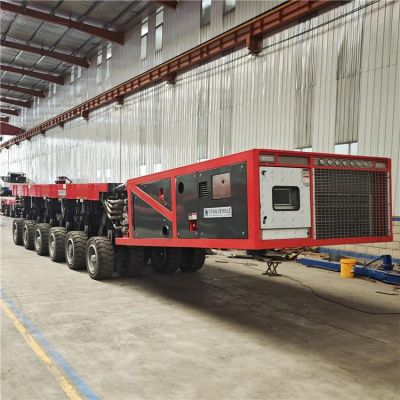
The PowerPack is an important component of an SPMT system because it supplies the power required for the transporter's drive and hydraulic functions. The control system is also important because the operator needs to coordinate movement and steering during heavy-load transportation.
When purchasing or importing an SPMT, buyers should confirm which components are included in the quotation. A quotation that covers only the transporter modules may not represent the cost of a complete working system. PowerPack, control equipment, hydraulic components, remote control and spare parts should be clearly listed when applicable.
 Why Choose a Self Propelled Modular Transporter (SPMT) Trailer for Heavy Haulage in Nigeria?
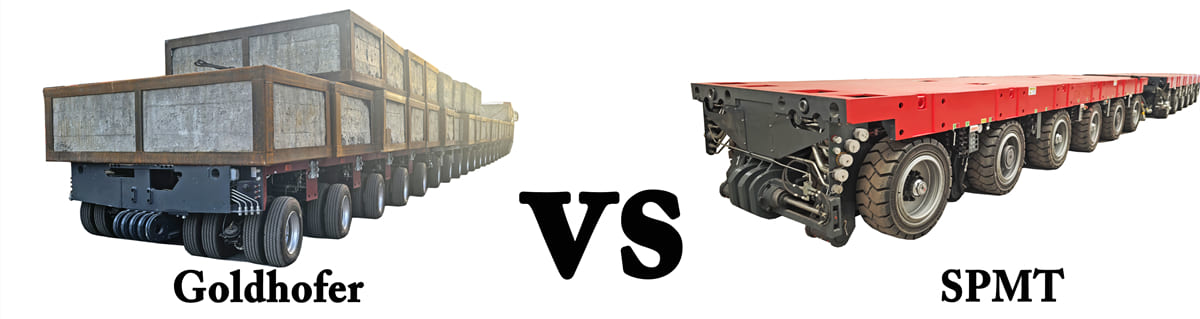
Goldhofer is a brand/manufacturer, while SPMT describes a type of transport equipment.
Therefore, comparing “Goldhofer” and “SPMT” as two completely separate types of products is not technically accurate.
A Goldhofer product can be an SPMT-type system, depending on the specific model.
The same applies to SCHEUERLE.
A Scheuerle transporter can refer to different heavy-transport equipment, while a Scheuerle SPMT specifically refers to its self-propelled modular transporter systems.
Goldhofer Trailer vs SPMT
Therefore, when a Nigerian customer searches for Goldhofer trailer for sale, the supplier should first clarify which Goldhofer-type equipment is required.
If the customer searches for SPMT trailer, the requirement is more specific because the customer is looking for a self-propelled modular system.
What Is a Scheuerle Transporter?
Scheuerle transporter is another term commonly associated with specialized heavy transport equipment.
SCHEUERLE has a long history in modular heavy transportation technology, including SPMT systems.
For a customer searching for a Scheuerle SPMT, the intended product is generally a self-propelled modular transporter rather than a conventional lowbed trailer.
Therefore, when a Nigerian customer searches for Goldhofer trailer for sale, the supplier should first clarify which Goldhofer-type equipment is required.
If the customer searches for SPMT trailer, the requirement is more specific because the customer is looking for a self-propelled modular system.
The same purchasing principle applies:
•Do not select the equipment based only on the brand or keyword.
•The supplier needs to know:
•Cargo weight
•Cargo dimensions
•Required axle load
•Number of axle lines
•Transport distance
•Road conditions
•Turning requirements
•Final positioning requirements
•Only then can the appropriate configuration be determined.
Goldhofer, Scheuerle and SPMT: What Should Buyers Compare?
For a Nigerian customer comparing a Goldhofer trailer, Scheuerle transporter and SPMT trailer, the most useful comparison is the equipment configuration.
Important factors include:
•Payload
How heavy is the cargo?
This determines the required transport capacity.
•Axle Configuration
How many axle lines are required?
More axle lines may be needed for heavier cargo and specific axle-load requirements.
•Dimensions
The width, length and height of the cargo affect the transporter configuration and route planning.
•Steering System
For large project cargo, maneuverability can be just as important as payload.
•PowerPack
For an SPMT, the power unit is an important part of the complete system.
•Hydraulic System
The hydraulic system affects suspension, leveling and other transporter functions.
•Spare Parts
For long-term operation, spare parts availability should be considered before purchase.
•Technical Support
For specialized heavy-haul equipment, commissioning, operation and maintenance support can be important considerations.
Why the Difference Between Brand and Equipment Type Matters
The distinction between a manufacturer name and an equipment type is important when searching for heavy-haul equipment online. A buyer may search for “Goldhofer trailer,” “Scheuerle transporter” or “SPMT trailer,” but these keywords do not always describe exactly the same type of equipment.
Goldhofer and SCHEUERLE are manufacturer or brand names associated with heavy-transport equipment. SPMT, on the other hand, describes a self-propelled modular transport concept. As a result, a buyer should not assume that every Goldhofer or Scheuerle product is an SPMT.
This also matters when comparing prices. A quotation for a towed modular trailer should not be directly compared with the quotation for a complete self-propelled system without checking what is included. The propulsion, PowerPack, control system and other components can create a significant difference in the equipment configuration.
Used Goldhofer or Scheuerle Equipment
For buyers considering used equipment, the model and equipment condition should be verified before focusing on the purchase price. A used modular transporter may contain multiple modules, hydraulic components, steering components and control equipment. The condition of these components can directly affect the practical value of the equipment.
The buyer can request photos, equipment lists, serial numbers and maintenance information. If possible, the buyer should also confirm the actual operating condition of the equipment before arranging shipment.
For a used SPMT, the available number of axle lines and the condition of the PowerPack are particularly relevant because the buyer may need to configure the equipment for a specific project.
Comparing Equipment by Project Application
A better comparison method is to start with the project instead of the brand. For example, a transformer transport project may prioritize load distribution and route requirements. A factory relocation may place more emphasis on maneuverability and precise positioning. A construction project may require a different module combination because of the cargo dimensions and site conditions.
This approach prevents a common purchasing problem: selecting equipment because it is a well-known name without confirming whether the configuration is suitable for the actual cargo.
 Goldhofer vs. SPMT: What Are the Main Differences?
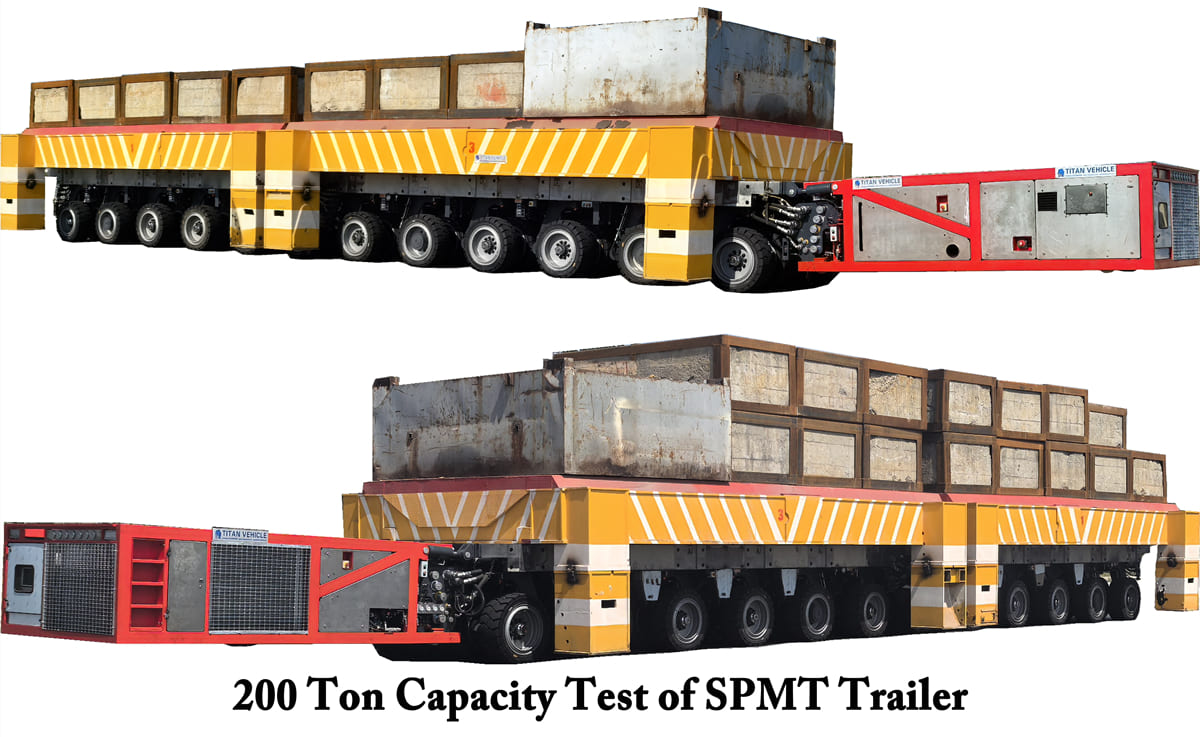
The price of a Goldhofer trailer for sale in Nigeria cannot be accurately represented by one fixed number.
A modular heavy-haul system is configured according to the project, so the final price depends on the selected equipment.
The main factors include:
•Number of axle lines
•Payload requirement
•Self-propelled or towed configuration
•PowerPack
•Steering system
•Hydraulic system
•New or used condition
•Production year
•Spare parts
•Shipping
•Optional equipment
For used equipment, the condition of the hydraulic, steering, drive and control systems also affects the quotation.
Therefore, if you are looking for an SPMT trailer price in Nigeria, the most useful way to request a quotation is to provide the cargo information first.
New or Used SPMT Trailer?
Both options can be considered depending on the project and budget.
A new system can be configured according to the customer's requirements.
A used Goldhofer or Scheuerle transporter may provide another procurement option, but the technical condition should be carefully checked before purchase.
For used SPMT equipment, customers should request:
•Model
•Manufacturing year
•Serial number
•Working condition
•Maintenance records
•Hydraulic system condition
•Drive system condition
•Steering system condition
•Control system condition
•Available modules
•Spare parts availability
The lowest purchase price is not necessarily the most appropriate option if the equipment requires significant repair before it can be used.
Why SPMT Prices Vary Between Projects
The cost of an SPMT or modular heavy-haul system can vary because the equipment is often configured for a specific transportation requirement. Two customers may both ask for an “SPMT trailer,” but one may need a smaller configuration while another may require more axle lines, additional modules and a larger PowerPack.
The shipment itself can also affect the total procurement cost. Buyers importing equipment into Nigeria should consider the equipment price together with packing, shipping and other project-related costs. The exact landed cost depends on the final equipment dimensions, weight, shipping arrangement and destination.
For this reason, an online product price should be treated as an initial reference rather than a complete project quotation.
Used Equipment: Price Versus Condition
For a used Goldhofer or Scheuerle transporter, buyers should pay attention to the condition of the complete system rather than only comparing the advertised purchase price.
A lower-priced unit may require hydraulic repairs, steering repairs, replacement control components or additional spare parts. These costs can change the actual procurement budget after the equipment arrives.
The buyer can therefore request a condition report and detailed equipment list before placing an order. If the equipment is composed of multiple modules, the quantity and condition of the available modules should also be confirmed.
Shipping and Delivery Considerations
Heavy-haul equipment itself can be oversized, especially when multiple modules and PowerPack components are shipped together. The final shipping arrangement should therefore be discussed after the equipment configuration is confirmed.
The buyer should ask the supplier how the modules will be prepared for shipment and whether the quotation includes shipping to the required Nigerian destination. The exact shipping method and cost should be confirmed according to the final shipment details rather than estimated only from a product title.
Request a Project-Based Quotation
Instead of asking only “How much is a Goldhofer trailer in Nigeria?”, a buyer can send the cargo information and ask for a suitable configuration and quotation. This gives the supplier enough information to distinguish between a towed modular trailer, SPMT system and other heavy-haul equipment.
A project-based quotation also makes it easier for the buyer to compare different suppliers because the requested equipment can be described by the same technical requirements.
 How Much Does a Goldhofer Trailer or SPMT Trailer Cost in Nigeria?
If you are looking for a Goldhofer trailer for sale, a Scheuerle transporter, a Scheuerle SPMT, or another modular transporter for a project in Nigeria, start with your actual transportation requirements.
A supplier should be able to discuss the configuration rather than simply provide a product name and price.
For a quotation, provide:
1. Cargo weight
The total weight of the cargo to be transported.
2. Cargo dimensions
Length, width and height.
3. Cargo support points
How the cargo will sit on the transporter.
4. Destination in Nigeria
Port, city, factory, construction site or other destination.
5. Transport route
If known, provide the road or project route.
6. Required equipment
Goldhofer-type modular trailer, SPMT, Scheuerle-type transporter or another heavy-haul solution.
7. New or used requirement
This will significantly affect the available equipment and quotation.
With these details, the supplier can recommend a suitable configuration and provide a more accurate quotation.
Buying an SPMT Trailer for a Nigeria Project
An SPMT purchase is different from buying an ordinary semi-trailer.
The customer is purchasing a transportation system rather than simply a trailer body.
For this reason, the quotation should clearly state what is included.
A complete quotation may need to identify:
•Transporter modules
•Number of axle lines
•PowerPack
•Hydraulic system
•Steering system
•Control system
•Remote control
•Spare parts
•Shipping
•Technical support
•Commissioning
This prevents misunderstandings between the buyer and supplier.
For Nigerian customers, shipping arrangements should also be confirmed according to the final dimensions and total shipment weight.
Goldhofer Trailer for Sale in Nigeria: Request a Configuration
If you are searching for a Goldhofer trailer for sale in Nigeria, the first step should not simply be asking for the lowest price.
The correct question is:
What configuration is suitable for my cargo?
For an SPMT project, provide the cargo weight and dimensions.
For a modular trailer project, provide the required payload and cargo type.
For a used Scheuerle transporter, provide the expected working condition and required capacity.
This information allows the supplier to determine whether you need:
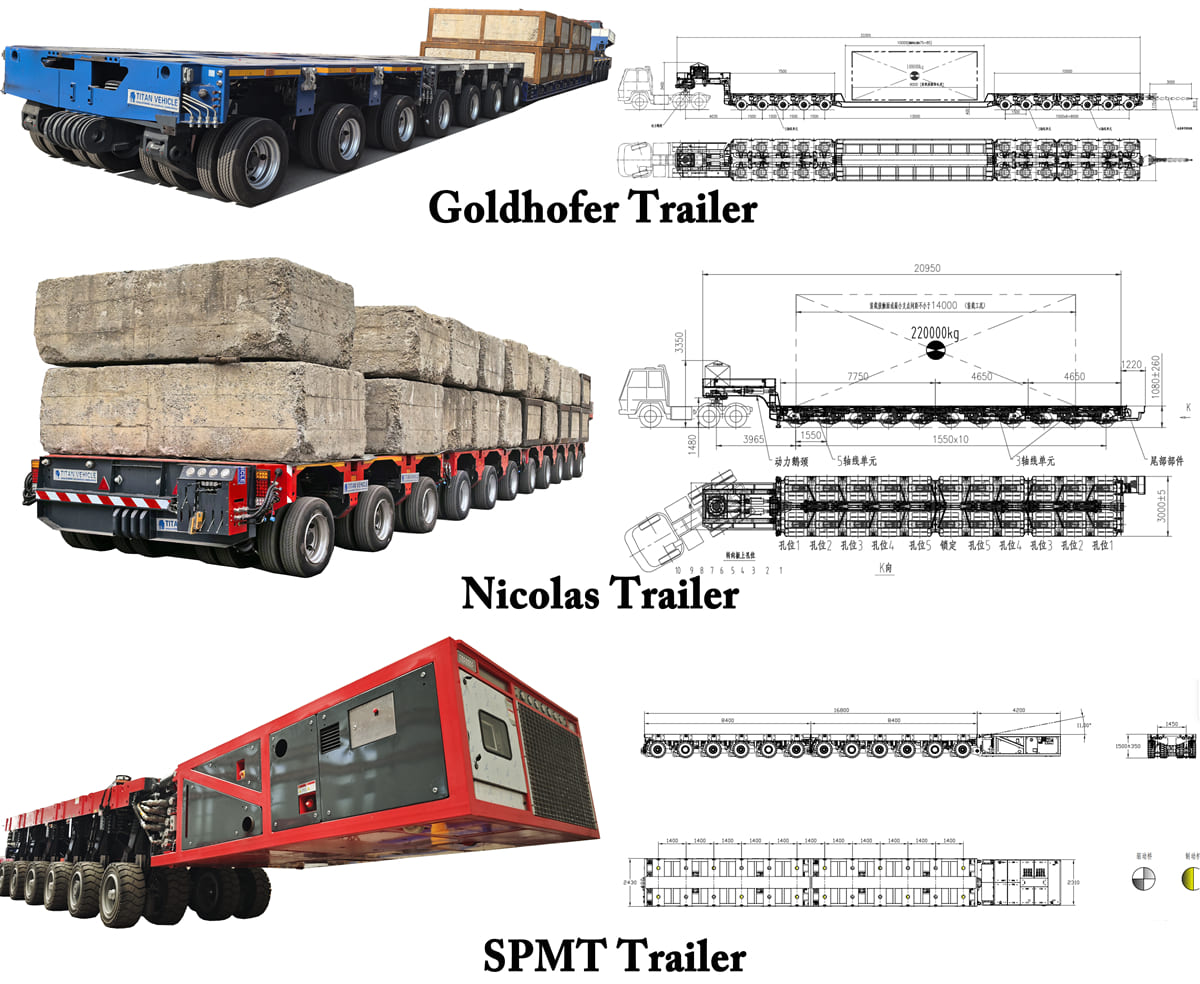
A conventional heavy-duty modular trailer
A self propelled modular transporter SPMT
A used Goldhofer transporter
A Scheuerle transporter
A Scheuerle SPMT
Another modular heavy-haul solution
The final equipment selection should be based on the actual transportation requirement.
A Goldhofer trailer for sale in Nigeria can refer to different types of heavy-duty transport equipment, while an SPMT trailer specifically refers to a self-propelled modular transportation system.
For heavy and oversized cargo, a self propelled modular transporter SPMT provides a combination of modular axle configuration, self-propulsion, hydraulic suspension and controlled steering.
A Scheuerle transporter and Scheuerle SPMT are also commonly associated with modular heavy-transport applications.
For Nigerian buyers, the most important information is the cargo weight, dimensions, loading points and destination. These details determine the appropriate transporter configuration and allow the supplier to prepare a meaningful quotation.
If you are looking for a Goldhofer trailer for sale, modular transporter, SPMT trailer or Scheuerle transporter for a project in Nigeria, send the cargo specifications and destination first. The equipment configuration and quotation can then be evaluated according to the actual project.
How to Prepare a Request for Quotation
A clear request for quotation can save time for both the buyer and supplier. Instead of sending only the keyword “Goldhofer trailer price,” the Nigerian buyer can describe the project in several lines.
For example, the buyer can state the cargo type, total weight, dimensions, destination and whether the equipment is required for road transportation or site movement. If the buyer is considering used equipment, the required production year or acceptable equipment condition can also be mentioned.
The supplier can then respond with a proposed configuration instead of sending a generic trailer price.
What Should Be Included in the Final Offer?
Before placing an order, the buyer should review the quotation carefully. The product description should identify the main equipment components and configuration.
For an SPMT system, this can include the number of axle lines, modules, PowerPack, steering and hydraulic systems, control equipment and other included components. For a towed modular trailer, the quotation should identify the trailer configuration, axle arrangement and other major components.
The commercial terms should also be clear. The buyer should confirm whether shipping is included, where the delivery point is, what spare parts are supplied and what technical support is available.
New SPMT or Used Transporter for a Nigerian Project?
The choice between new and used equipment depends on the customer's project requirements, budget and expected operating conditions. New equipment may be suitable when the buyer needs a specific configuration and wants the system prepared for a particular project.
Used equipment can be considered when the buyer is looking for an existing configuration. In this case, the actual condition and available modules need to be verified carefully.
There is no single configuration that is suitable for every Nigerian heavy-haul project. A transformer transport project, industrial machinery project and construction project can have very different requirements.
After-Sales and Spare Parts Considerations
Heavy-transport equipment is normally expected to work on demanding projects, so after-sales support should be discussed before purchase. Buyers can ask about spare parts availability, technical documentation, hydraulic components, steering components and control-system support.
For used equipment in particular, knowing which spare parts are available can be useful before the equipment is shipped. The buyer should also confirm whether the supplier can provide operating information or technical assistance when required.
From Product Search to Project Solution
Searching for “Goldhofer trailer for sale in Nigeria” or “Scheuerle SPMT for sale” is a useful starting point, but the purchasing process should move from the keyword to the actual project requirements.
A suitable supplier should be able to discuss the cargo and explain why a particular modular configuration is proposed. The buyer can then compare the equipment configuration, technical specifications, commercial terms and support rather than comparing only the product name.
For Nigerian buyers, this approach is especially useful for large project cargo because the transportation equipment is normally part of a wider logistics plan. The final solution should consider the cargo, route, loading method, destination and required positioning operation together.
 Where to Buy Goldhofer Trailers and Scheuerle Transporters in Nigeria?