1. What Is a 40ft Skeleton Trailer and What Containers Can It Transport?
2. How Much Does a 40ft Skeleton Trailer Cost in Venezuela?
3. What Are the Advantages of Using a Skeleton Semi Trailer for Container Transport?
4. How to Choose a Reliable 40ft Skeleton Semi Trailer Supplier in Venezuela?
5. What Should You Check Before Buying a Skeleton Container Trailer?
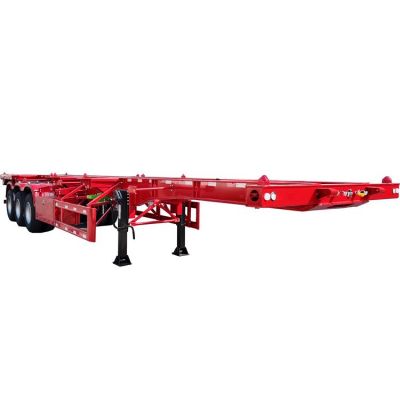
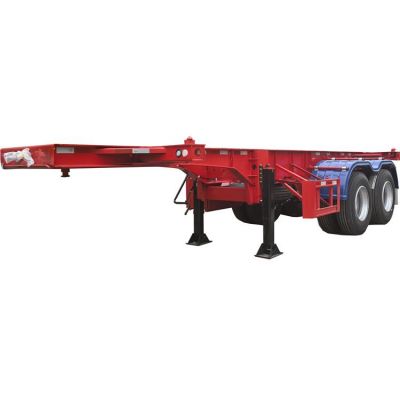
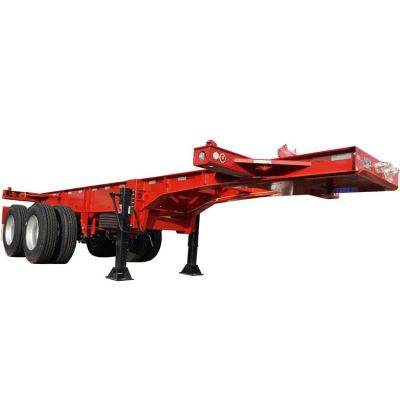
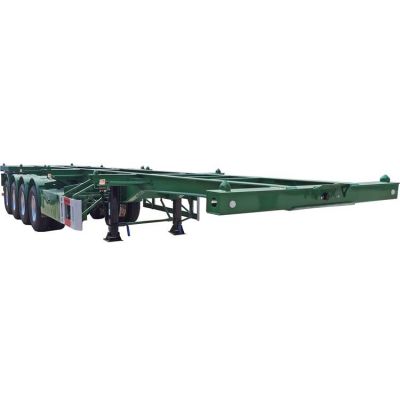
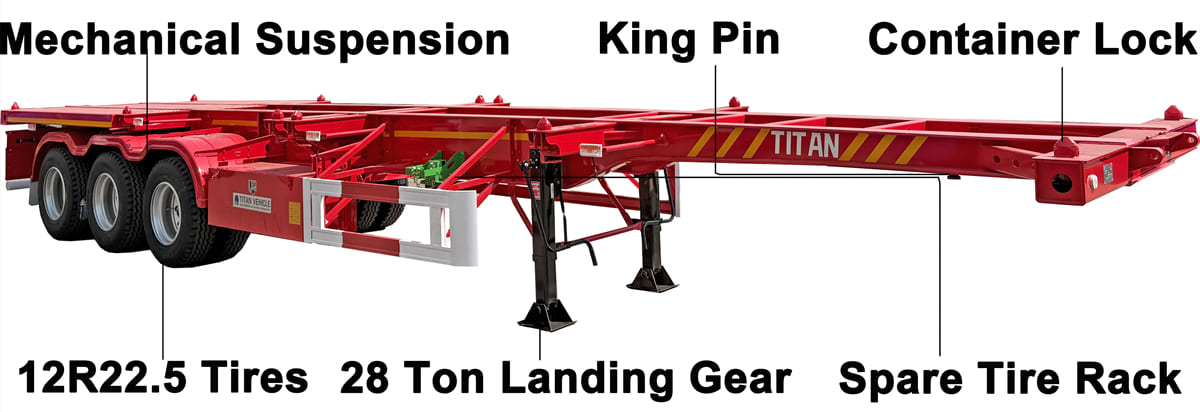
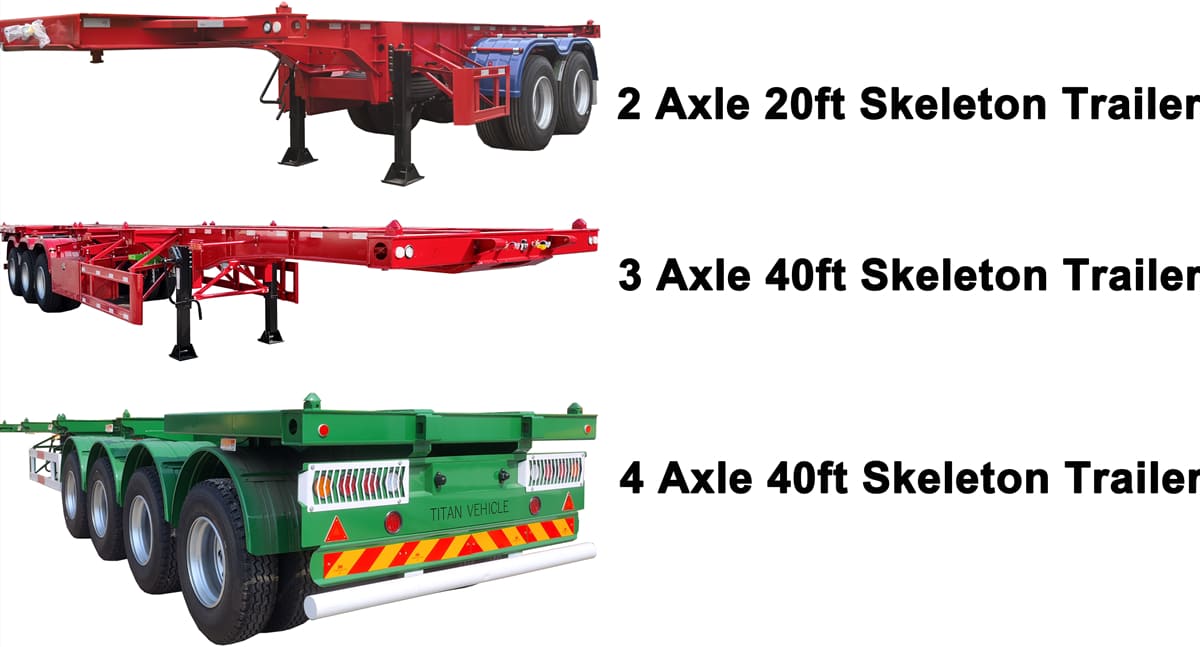
A 40ft skeleton trailer for sale—frequently identified across global shipping networks and Latin American freight corridors as a skeleton container trailer, 40ft skeleton semi trailer, or intermodal container chassis—is an unclad structural steel framework engineered specifically for securing, supporting, and hauling standardized ISO freight containers. By eliminating wooden decking, heavy steel floor plates, fixed side panels, stake pockets, and roof components, the trailer chassis minimizes unladen tare weight while maximizing structural beam rigidity. This lightweight yet ultra-durable design makes it the essential workhorse for port terminal haulage, intermodal rail yards, container freight stations (CFS), and long-distance highway logistics across Venezuela.
The structural backbone of a skeleton semi trailer relies on two heavy-duty longitudinal main I-beams manufactured from high-tensile carbon steel alloys such as Q345B, Q460, or ultra-high-strength HG60/T700. These parallel main girders are securely joined together by transverse crossmembers, diagonal outriggers, corner bolster beams, and integrated container twistlock assemblies. Because there is no solid floor deck to distribute weight, all vertical deadweight from loaded containers and dynamic highway vibrations pass directly through the main chassis beams straight into the multi-axle mechanical suspension, kingpin plate, and wheel assemblies.
Containers and Specialized Cargo Compatibility
A standard 40ft skeleton trailer for sale equipped with 12 sets of factory-fitted ISO container twistlocks provides complete transport versatility. It can securely lock down and haul the following container formats across Venezuelan trade routes:
One 40ft ISO Dry Cargo Container: Locked in place using the four corner twistlocks located on the extreme front and rear bolster beams.
One 40ft High Cube (40HC) Container: Fits best on a gooseneck 40ft skeleton semi trailer frame. The dropped front-frame profile accommodates the container's tunnel recess, lowering the overall ride height to navigate low-clearance urban bridges, mountain overpasses, and low power lines safely across Venezuela.
Two 20ft ISO Containers: Positioned end-to-end along the frame and locked down using the middle, front, and rear twistlock sets simultaneously.
One Heavy 20ft ISO Container: Positioned squarely on the center bolster twistlocks. Centering a single 20ft container ensures proper axle load distribution over the trailer axles and tractor fifth wheel, avoiding tractor front-axle lift and single-axle overloading fines at Venezuelan highway scale stations.
40ft Refrigerated (Reefer) Containers: Accommodated seamlessly when built with optional nose-mount generator set (Genset) mounting brackets, diesel tank cradles, and electrical connection conduits.
ISO Tank Containers (20ft / 30ft / 40ft Liquid Tanks): Employed for hauling hazardous liquids, industrial chemicals, food-grade oils, or bulk fuel products when fitted with reinforced tank-saddle bolsters and spill-containment trays.
Structural Engineering: Main Beam Materials and Manufacturing Innovations
The operational lifespan of a skeleton container trailer operating across Venezuela depends heavily on its core steel metallurgy and chassis frame welding technology. Hauling heavy payload weights over unpaved secondary routes and high-humidity coastal highways can lead to frame sagging or beam fractures if low-grade steel is used.
High-Tensile Steel Material Grades Comparison:
Q345B Carbon Structural Steel: Yield strength of $345 \text{ MPa}$. Standard material suitable for light-to-medium container transport on paved interstate highways.
Q460 / T700 High-Tensile Steel: Yield strength ranging from $460 \text{ MPa}$ to $700 \text{ MPa}$. Recommended for heavy-duty container haulage in Venezuela. It delivers a 20% increase in yield strength while optimizing flange thickness, reducing chassis tare weight without compromising load-bearing integrity.
HG60 Ultra-High-Strength Alloy Steel: Offers extreme impact resistance and high fatigue limits under high dynamic stress, making it ideal for multi-axle heavy-haul chassis operating in severe off-road mining environment.
Automatic Submerged Arc Welding (SAW) Technology:
To withstand intense dynamic shocks and torsional stress during tight turns, quality trailer manufacturers construct main longitudinal beams using full-length Automatic Submerged Arc Welding (SAW). Unlike manual spot welding, submerged arc welding provides:
Continuous, deep weld penetration along the upper flange plates, lower flange plates, and vertical web plates.
Eliminates internal air pockets, blowholes, structural porosity, and cold-weld defects.
Smooth, uniform weld seams that evenly distribute dynamic twisting forces when navigating roundabout intersections, unpaved port terminals, or mountain passes.
 What Is a 40ft Skeleton Trailer and What Containers Can It Transport?
In Venezuela, a new 40ft skeleton trailer for sale typically costs between $8,500 USD and $14,500 USD on FOB (Free on Board) or CIF (Cost, Insurance, and Freight) purchase terms. Total turn-key costs delivered to key Venezuelan ports—such as Puerto Cabello, La Guaira, or Maracaibo—depend on ocean freight market rates, structural steel grade specifications, axle brand choices, and heavy-duty suspension upgrades built for regional road conditions.
Major Cost Drivers in the Venezuelan Market
Structural Steel Grade Selection: Specifying high-tensile steel (such as Q460 or T700) increases initial purchase cost compared to basic Q235 carbon steel, but prevents main-beam sagging under 50-ton container loads on uneven roads.
Axle Brand and Weight Rating: Choosing premier axle brands (such as BPW or original FUWA 16-ton axles) adds 1,200 to 2,500 USD compared to non-branded axles. However, premium units offer far superior heat dissipation and longer brake shoe life on steep mountain descents (such as the steep highway connecting La Guaira port to Caracas).
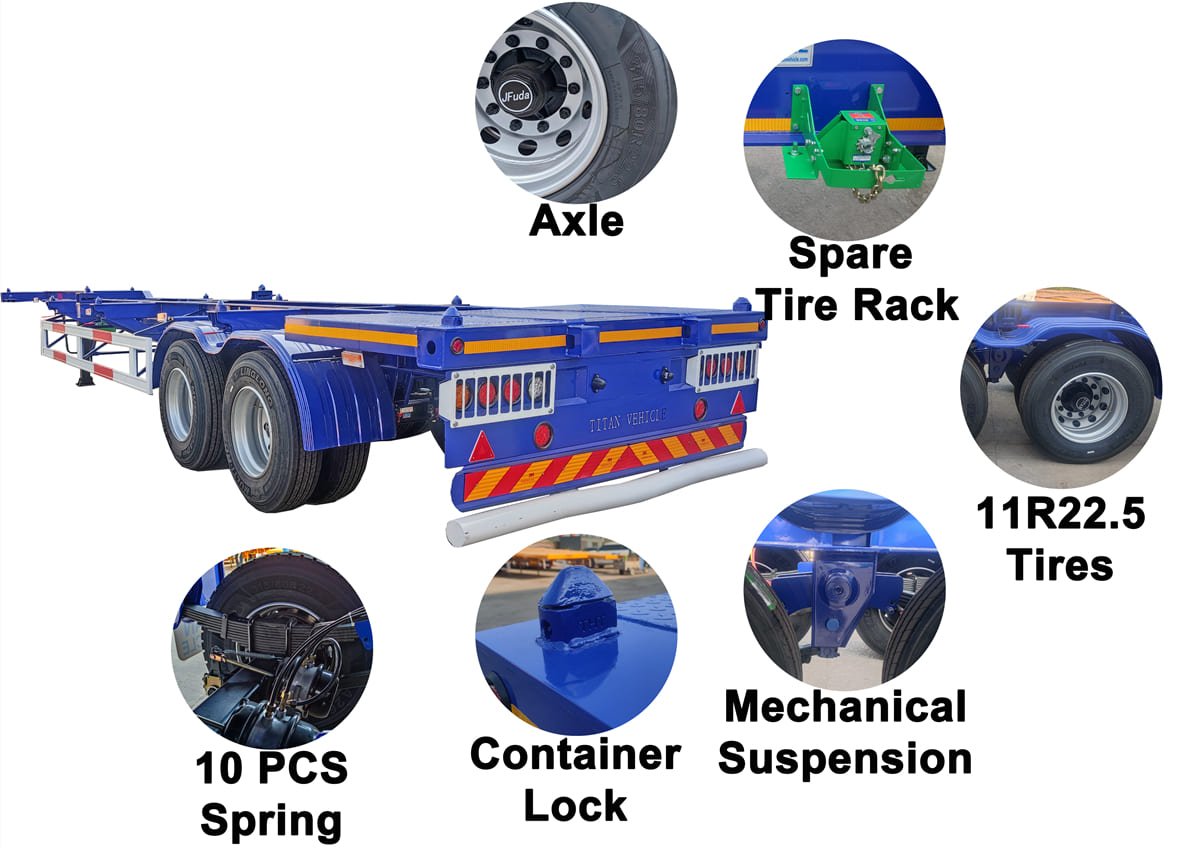
Tire Configuration and Spare Carriers: Upgrading from standard tubeless tires (315/80R22.5) to heavy-duty radial tube tires (12.00R20) with double spare tire carriers adds 800 to 1,500 USD, providing essential puncture resistance on remote secondary roads across Venezuela.
Ocean Freight Logistics and Customs Duties: Shipping a skeleton container trailer to Venezuelan ports via Ro-Ro (Roll-on/Roll-off) vessels, bulk cargo ships, or flat-rack container bundling involves variable maritime shipping rates, ocean transit insurance, customs clearance fees, and local port handling charges.
 How Much Does a 40ft Skeleton Trailer Cost in Venezuela?
A skeleton semi trailer delivers significant economic and operational benefits over standard flatbed trailers for container logistics. By featuring a purpose-built frame, quick-twistlock securing mechanisms, lower tare weight, and low center-of-gravity options, the 40ft skeleton semi trailer increases fuel efficiency, maximizes legal payload capacities, lowers maintenance requirements, and speeds up port turnaround times.
Maximum Payload Capacity & Fuel Economy: Because a skeleton container trailer strips away heavy wooden or steel deck flooring, side walls, and stakes, total unladen tare weight is greatly reduced compared to a flatbed trailer. Reduced unladen weight means tractors burn significantly less diesel fuel when returning empty from inland distribution centers to coastal ports in Venezuela.
Rapid and Secure Container Lock-Down: Standard flatbed trailers require manual ratcheting straps, chains, or complex binder setups. A 40ft skeleton trailer for sale comes factory-fitted with 12 precision ISO twistlocks. Drivers simply align container corner castings over bolster locks, turn the lock handles 90 degrees, and set safety pins—securing cargo in under two minutes and reducing port terminal wait times.
Superior Frame Rigidity and Structural Durability: Designed exclusively for point-load distribution at corner bolsters, high-quality chassis frames feature submerged arc-welded main beams engineered to withstand high dynamic torsional stress. This structural resilience prevents frame twisting and chassis bowing on sharp curves and unpaved port terminals.
Lower Operational Maintenance and Extended Service Life: Without floorboards that rot, bend, or require replacement after exposure to tropical rain and coastal humidity, long-term maintenance costs remain low. Inspection and servicing are straightforward because the frame, air lines, and brake system components are fully exposed.
Lower Height Profile with Gooseneck Variants: A 40ft gooseneck skeleton container trailer drops the container seating height by 150 mm to 200 mm. This improves highway stability, reduces rollover risks during sharp maneuvers, and ensures safe clearance under height-restricted overpasses when transporting 9'6" High Cube (40HC) containers.
 What Are the Advantages of Using a Skeleton Semi Trailer for Container Transport?
Selecting the right supplier for a 40ft skeleton trailer for sale requires evaluating structural engineering standards, steel material quality, component sourcing, export capabilities to South American ports, and local technical support. Working with a reliable manufacturer ensures your skeleton container trailer meets Venezuelan road safety laws, survives heavy workloads, and provides long-term ROI.
Step 1: Verify Steel Material Grades and Beam Fabrication: Ask for material mill test certificates confirming structural steel grades. Main Beams should use Q345B, Q460, or T700 high-tensile steel (avoid standard mild steel like Q235, which sags under heavy loads). Confirm main beams are welded using automatic submerged arc welding (SAW) to prevent stress fractures from manual spot welding.
Step 2: Audit Axle, Suspension, and Brake Systems: Demand heavy-duty 13-ton or 16-ton axles from reputable brands like FUWA, BPW, or SAF. Ensure the trailer is fitted with dual-line pneumatic brake systems and WABCO ABS valves for safe emergency braking on mountain descents. Select reinforced 10-leaf spring mechanical suspension (13 mm or 16 mm leaf thickness) suited for rough Venezuelan roads.
Step 3: Assess Port Delivery and Export Expertise to Venezuela: Choose manufacturers with established shipping pathways to major Venezuelan ports, such as Puerto Cabello, La Guaira, or Maracaibo. Verify that the supplier applies sandblasting (Sa 2.5 standard), multi-layer anti-corrosion primer, polyurethane topcoat paint, and marine wax coatings to prevent saltwater corrosion during ocean transit.
Step 4: Check Customization Options for Local Regulations: A reliable supplier should customize the chassis frame to match local operating conditions in Venezuela: heavy-duty rear bumper bars, side underrun guards, dual spare tire carriers, large lockable toolboxes, and optional generator set mounts for reefer transport.
After-Sales Technical Support and Spare Parts Availability
Acquiring a skeleton semi trailer is a long-term capital investment. A critical factor in choosing a supplier is their ability to provide technical support, warranty enforcement, and spare parts availability across South American markets:
Standardized Wear Parts: Ensure your supplier maintains stock or uses globally standardized components that match local Venezuelan parts distributors (standardized brake shoes, drums, and ISO twistlock assemblies).
Warranty Terms: A reliable manufacturer should offer a 12-month to 24-month structural warranty covering main beam cracks and frame deformation, alongside digital parts catalogs and online technical support for fleet mechanics in Venezuela.

How to Choose a Reliable 40ft Skeleton Semi Trailer Supplier in Venezuela?
Before committing to a 40ft skeleton trailer for sale, conduct a thorough pre-purchase technical inspection. Checking structural frame integrity, twistlock operation, axle alignment, brake responsiveness, suspension mountings, and anti-corrosion paint finish protects your capital investment and prevents unexpected fleet downtime in Venezuela.
Frame Weld and Structural Integrity: Sight down the length of both main longitudinal beams to check for bowing, warping, or axial twisting. Inspect all crossmember joints, gooseneck transitions, and bolster attachments for weld porosity or micro-cracks, ensuring continuous submerged arc welding along main beam flanges.
Twistlock Functionality and Bolster Alignment: Rotate each of the 12 container twistlocks manually. Locks should turn freely without binding, and drop-down lock pins must seat securely. Verify center-to-center distances between twistlocks using standardized ISO container dimensions.
Axle Alignment and Suspension Setup: Ensure axles are parallel and perpendicular to the kingpin centerline to prevent uneven tire wear and dog-tracking on the highway. Inspect spring hangers, equalizer pins, torque arms, and leaf spring U-bolts.
Brake and Pneumatic System Leak Test: Connect trailer gladhands to an air supply charged to 8 bar (approx. 116 psi). Apply brakes and check for air pressure leaks along pneumatic lines, relay valves, and brake chambers. Verify that ABS warning lights complete diagnostic checks properly.
Paint Finish and Corrosion Protection: Measure dry film thickness (DFT) using a coating gauge. A durable finish should have a total paint thickness of at least 120 to 150 microns (primer + polyurethane topcoat) to protect steel against coastal salt air corrosion.
 What Should You Check Before Buying a Skeleton Container Trailer?